<?xml version="1.0" encoding="UTF-8"?>
<ixml xmlns="http://www.icaap.org/schema" xmlns:xsi="http://www.w3.org/2001/XMLSchema-instance" xsi:schemaLocation="http://www.icaap.org/schema
http://www.icaap.org/schema/ixml1.xsd">
<head type="article" peer="yes" icaap="member" lang="en">
 <resourcegroup>
 <description> 
	<stylesheet>/article.css</stylesheet>
	<graphic>/logo.gif</graphic>
	<web>http://www.sociology.org/content/vol003.003/beckett.html</web>
	<title>Disembodied Learning</title> 
	<subtitle>How Flexible Delivery Shoots Higher Education in the Foot, Well Sort of</subtitle> 
	<availability status="free">Copyright 1998 Electronic Journal of Sociology</availability>
</description>

 <author>
	<name>
	 <first>David</first>
	 <last>Beckett</last>
	</name>
	<address>
	 <email>d.beckett@edfac.unimelb.edu.au</email>
	 <organisation>University of Melbourne</organisation>
	 <division>Department of Vocational Education and Training</division>
	</address>
</author>
</resourcegroup>
 
 <publicationgroup> 
 <description>
	<web>http://www.sociology.org/</web>
 <title>Electronic Journal of Sociology</title>
	<idno type="issn">1198 3655</idno>
</description>
 <publisher>
	<name><full>Athabasca University</full></name>
	<address><street>1 University Drive</street><city>Athabasca</city>
	 <province>Alberta</province><postalcode>SOG OWO</postalcode>
	 <email>mikes@athabascau.ca</email>
	</address>
</publisher>
 <distributor> 
	<name><full>International Consortium for Alternative Academic Publication</full></name>
 <address><web>www.icaap.org</web></address>
</distributor>
</publicationgroup>
 
 <seriesgroup> 
 <description>
	<web>http://www.sociology.org/content/vol003.003/</web>
	<date><year>1998</year></date> 
	<idno type="VOL">3.3</idno> 
</description>
</seriesgroup>

 <indexinggroup> 
 <keywords scheme="lcsh"> 
	<item>Sociology</item>
	<item>Social Sciences</item>
	<item>Social Problems</item>
	<item>Periodicals</item>
</keywords>
 <idno type="IUICODE">100.3.3.2</idno> 
 <startdate><year>1994-</year></startdate>
</indexinggroup>
</head>
<body>

<publicationnote><p>Dr David Beckett, lecturer in VET, at The
University of Melbourne, publishes on professional practice,
organisational epistemology, policy analysis and philosophy of
education. Contact is welcome: Phone (03) 9810 3231; Fax (03) 9810
3170; E-mail d.beckett@edfac.unimelb.edu.au</p></publicationnote>

<h2>Written on the Body? Writing off the Body</h2>

<p>One of the great ironies in education at the moment is that increasing attention is being given to the 
body - how meaning is `written' on it by gender, ethnicity and class - at the same time as the new 
information technology provides for the body's very disappearance from learning. `Flexible delivery' writes 
the body out of the learning equation - or tends to. This short paper, shaped by philosophy and styled as 
polemic, discusses this irony. It ends up with a few worries about flexible delivery, especially the so-
called `delivery' of learning, and suggests that higher education may not be as well-served by flexible 
delivery as is currently thought.</p>

<p>First however, some contextual details. `Flexible delivery', at least in Australia, is the umbrella term 
for the entire range of multi-media provision of course and
subject materials, and of the pedagogy by which 
these are meant to advance learning. Both of these
are now afforded by globalised, broadbanded technology. At 
one end of a range, this includes totally on-line materials and
pedagogies. Here, physical contacts and print 
materials may be completely redundant. This contrasts with more traditional `distance education' or `open 
learning' where some blend of mailed-out print materials, on-line or televisual materials, and physical 
attendance is required (more of a middle range position). Somewhere at the other end of this range is the 
typical physical campus. Here we have classes in rooms, in interaction with each other and with a lecturer-as-teacher. 
Various admixtures of these basic ingredients in higher education award-bearing courses and subjects 
provide `packaging' or modes of provision for different sorts of access to learning. Hence: `flexible 
delivery'.</p>

<p>In Australian higher education, it is the vocational education and training (VET) sector - the 
trade, para-professional, community-based awards - which is leading the charge. But universities are not far 
behind. Academics everywhere are `marking up' their courses and subjects into on-line mode as fast as the 
`marketing up' of this new electronic access is pushing ahead. My own department is caught up in the midst 
of this, since our field of study is VET, but from an academic perspective. For example, all our Master of 
Education subjects in VET are expected to be on-line by year 2000. In this respect, we represent a typical 
response to what some are calling the `crisis of the universities'. Emeritus Professor of Sociology at Leeds 
University, Zymunt Bauman, put this with erudition:</p>

<blockquote>This...is the gist of the present crisis. With virtually all orthodox grounds and 
justifications of their once elevated position either gone or considerably weakened, 
universities...face the need to re-think and articulate anew their role in a world which has no use 
for their traditional services, sets new rules for the game of prestige and influence and views with 
growing suspicion the values they stood for. One obvious strategy is to accept the new rules and 
play the game accordingly. In practice this means submission to the stern criteria of the 
marketplace...(18)</blockquote>

<p>Bauman, it must be said, then goes on to argue for a more eclectic set of responses. But his main point is 
a telling one. We are, in universities, caught up in a vast epistemological re-negotiation. This involves the 
rest of the community, technology, the nature of work - and a retrieval, I would argue, of some holistic 
notion of vocation. In what follows, I can only touch (lightly) on these substantial areas. And my vehicle 
along this pathway is the `flexible delivery' bandwagon, as defined above.</p>

<p>But do not misunderstand me. I am not a Luddite: no laptop-smashing here! I applaud access to 
learning through technology, not least because, across the history of mass schooling (say, since the 1870s), 
technologies like chalk and readers and globes and excursions and calculators have literally been 
instrumental in shaping more and better knowledge than every before - for more people. Broadbanded 
information technology, however, is much more powerful than these. It has turned the globe into the global. 
Local classrooms, unless they plug in to the global, are condemned not just to the local, but also to the 
parochial. Educational ideologies are moving with the times, too. Lifelong, self-directed learning is, we are 
told, soon to be available via flexible delivery. The missionaries have returned and they have seen the 
future. Nothing less than the complete transformation of the `learning industry' is supposedly required 
(Norris and Dolence 1996). If this is so, higher education has been colonised by the new technology.</p>

<p>With all this as contextual background, I want now to critique what this means for the existence of 
teaching and the quality of learning.</p>

<h2>Real Time, Real Space: Just Being There</h2>

<p>Let us grant this colonisation. Let us grant, even, that such globalised colonisation is a  <i>desirable 
</i> future. What, however, are the consequences of access to `delivery' of learning where a major part of 
that access is now technologically unbound by real time and real space? In real time and real space, learners 
appear as embodied beings (in `synchronous interaction'; Berge 1995). However, in `asynchronous' time 
and space, learners' embodiments are educationally irrelevant. They need not `appear' in learning at all. We 
know they are out there, but their interaction is mediated by technologised time and space. This must affect 
the quality of learning, and, as I will argue below, a phenomenon crucial to high quality learning is, due to 
flexible delivery, endangered.</p>

<p>Classroom dynamics and management have been a close focus of education research
for at least three decades. Perhaps since the realisation in the late 1960s that Western society was becoming more diverse and 
that, in schooling, one shoe no longer fit all feet. Class sizes, gender- and ethnicity-related learning 
styles, teacher behaviours, activity-based and experiential pedagogies, assessment variables, and so on, have 
all been ingredients in debates about how  <i>just being there</i> in a classroom as an individual
learner-in-a-group improves one's education (or perhaps impedes it). Diversity has emerged locally, classroom by 
classroom, as a fact of teachers' and learners' lives. Rather late in all this, new information technology has 
arrived, promising individualised (or self-directive) ownership of learning.</p>

<p>Now we can arrange learning environments through new technology which removes the need to `just be 
there' - that is, in the room. At once, you may say, we have eradicated the pathology of the classroom: 
learners will no longer feel their very presence has generated an inscription on their bodies by others. Fat, 
thin, shy, squeaky-voiced, slow, boisterous, late, sleepy, hairy - the whole Seven Dwarfs
roll call - will be 
irrelevant in the new virtual learning environment. Learners can log on and off in their time, arranging their 
learning program, without regard for appearances in real time or real space. And isn't this a great advance?</p>

<p>Undoubtedly so. Yet at the same time as diversity and technology are engaging, our culture is coming to 
terms with a new emphasis on visual literacy. Perhaps the greatest cultural change we are facing is the shift 
from the primacy of the printed word to the primacy of the visual image. The English, we are told, wanted 
to  <i>see</i> the signs of the Royal Family's recent grief. The symbols were clear, compelling and 
populist. We eventually saw the Royals walking past the flowers sent for Diana, processing behind the 
coffin through the streets of London, standing in the street as it passed, and so on. These are strong visual 
signals, transcending the `withdrawal' which was the traditional, more dour, style of mourning. The week 
after the death of Diana is one example, but a powerful one, of the `reading' of an environment in which 
everyone involved was on a steep learning curve: the English learnt as much about themselves then as at any 
time since Churchill. And the reading was visual, right from the fury at the paparazzi (whose very existence 
is due to the primacy of the visual image - taking pictures we've all looked at) to the sight of the flower-
strewn hearse heading up the motorway.</p>

<h2>Delivering Visual Literacy</h2>

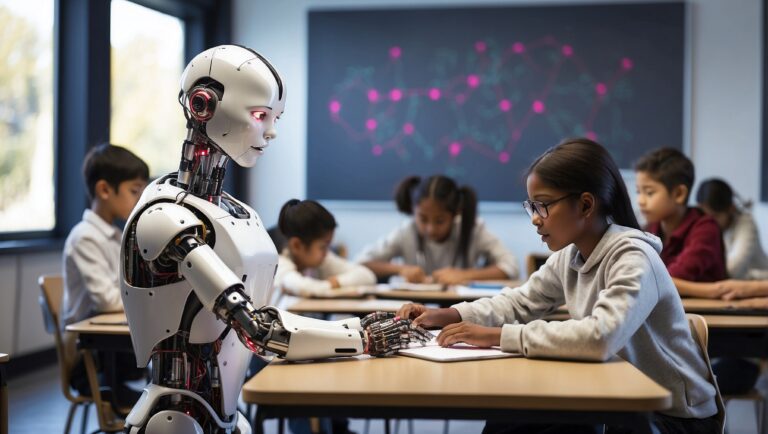
<p>Does flexible delivery engage this new visual literacy? On-line courses can look very pretty, but their 
substance seems to be a prolonged involvement with printed text. Moreover, in the absence of a real-time, 
real-space classroom, learners require virtually all the directions in great detail lest, in their real time, they 
lose their way. On-line subject material is, in this sense, ambiguous. Hypertext links can leave a wide 
variety of sequenced, and randomised, informational pathways open to the learner. In terms of
self-direction, this is exceptionally liberating. Smart minds can turn information into self-education, given half a 
chance. But in terms of  <i>socio-culturally significant information,</i> even the smartest minds need to 
know, eventually, what their peers think, and even what the teacher thinks, about the information they have 
cut and pasted into their own `take' on the world. Furthermore, everyone expecting to learn `on-line' needs 
a distillation of the previous attempts to establish, structure and overturn what counts as worthwhile 
knowledge. The information-presenting function of on-line courses (as an example of flexible delivery) is 
unquestioned. But as knowledge-presenting functions, such delivery is ambiguous. Like a huge shopping 
mall, the technology in itself invites the learner to buy, but only to satisfy mindless consumption. We learn 
because we have a social curiosity. We want to learn because we know our own limitations, our own 
ignorance. Self-direction, especially in front of the WWW, looks increasingly capricious. In the face of this, 
flexible delivery needs, at the very point of learner experience, to be heavily structured. This is almost 
paradoxical. The paradox is compounded when we notice that the more divergent from printed text such on-
line courses appear (the more they engage the visually-literate, perhaps), the greater they rely on traditional 
print literacy for navigation.</p>

<p>Of course, the new flexible delivery permits, and requires, feedback, I hear you say (I don't actually  <i>
see</i> you say it, though, do I?). All manner of group-based networking, with and without the teacher, is 
possible, and assessment tasks can key in to these. This is true - and it is essential. But the more essential 
point remains<i>: flexible delivery offers an excessively individualistic educational ideology, which, to 
avoid eccentric and idiosyncratic knowledge-claims emerging, structures masses of teacher input, in printed 
text format.</i></p>

<p>In contrast, this is not what classrooms provide, now, in real time, and in real space, with real bodies 
present. They provide something much more valuable. I will now outline what it is about classrooms that 
tends to generate high-quality learning, by concentrating on a phenomenon ignored by most aspects of 
flexible delivery.</p>

<h2>The Eros of Learning</h2>

<p>After acknowledging the pathological aspects of classroom learning, mentioned earlier, and pledging 
ourselves to remediate them, we are still left with what some in education call  <i>the eros of 
learning.</i> This is not the pursuit of the erotic-as-sexuality, but the recognition of the wider notion of the 
erotic-as-pleasure, and it is to be found in the work of the best classroom teachers when they energise a 
class with a love for the content, and a love for learning in itself. This is a professionally-responsible 
characterisation of the  <i>enthusiasmos</i> which inspires learners to learn more. It typically happens in 
real time in real classes of real embodied people. As one of the foremost researchers in the field, Erica 
McWilliam, writes:</p>

<blockquote>In describing teachers and students as `bodies' we are conscious that the reader may 
regard this descriptor as impoverished or demeaning of persons engaged in pedagogical work. 
However...this descriptor...is being reclaimed in a new area of social theorising called <i>
embodiment theory</i>...[where] authors speak of a `lived body'...or a `mindful body' ...in ways 
that constitute a departure from the traditional Western `mind/body' distinction. The `self' is 
understood to be an integrated being in which capability is not ascribed to a decorporatised mind 
but in a body as a lived structure and locus of experience...This is an important shift for 
understanding how new forms of pedagogy are being experienced or `lived out' when they demand 
the absence, removal, or semi-disappearance of the fleshly bodies of teachers and students from the 
university seminar room or staff room. (McWilliam and Palmer p164)
</blockquote>

<p>McWilliam nails home the point well. There is a strong and inevitably visual element in this 
environment: classrooms can tap our emerging visual culture - say, as performance - the way 
`asynchronous' interaction could not even identify. Humour, anecdote, negotiation and spontaneity are 
hallmarks of this kind of learning, and of this sort of teaching. Putting out spotfires, seizing the moment, 
catching the nuance and making something unique out of human sensibilities as they are inevitably revealed 
are all part of this, too. You have to be there! Unfortunately, with on-line courses, all this is off-limits.</p>

<p>In curriculum terms, what is going on is not the `delivery' of content, by processes which are 
`facilitated' by a teacher or trainer, and `chosen' by `self-directed' learners. Instead, what is going on is the 
construction of content, by processes which are negotiated during that construction. The teacher has broad 
aims which s/he works towards within the class, but the energy generated on the way through is formative. 
There are detours, backtracks, byways, brick walls and many fallings-short. The point is that cues from all 
those who are bodily present are central to all that. These cues will be behavioural in the richer sense that 
involves the inference of meanings from `body language', especially the visual - eye contact (and therefore 
the oral and the aural). These inferences actively transform the content and the processes in reflexive 
fashion, on the spot, to arrive at a unique curriculum.</p>

<p>This is the `hot action' of the classroom (Beckett 1996). It is, if you like, the erotification of learning in 
the sense that the dynamics of such classrooms play out the curriculum intentions presented in planned and 
accredited documents. Competency-based training minimises the chances of this occurring - and that is 
another debate to have. But so does `flexible delivery' when it is just a pseudonym for information 
technology which virtually (sic) reduces the learner to disembodiment. And that, dear reader (not viewer!) 
reinstates the <i>Ghost in the Machine</i>: all mind plus mechanistic body (Ryle 1949, Schon 1987). This 
dualism, rightly criticised by Ryle and Schon, has constructed and justified elite education of all kinds, for 
centuries, in grammar schools and Oxbridge, and, yes, amongst senior secondary credentials like the 
International Baccalaureate, and its equivalents around Western schooling (the academic mind reigns 
supreme). The consequence of this for vocational education and training has been to keep it in its lowly 
place - as mechanistic, instrumental and `mind-less' learning.</p>

<p>Nevertheless, VET, perhaps more so than other emphases in higher education, is rightly serious about 
bodies and what they can do, especially at work, and about identifying this with thinking. It was John 
Dewey who brought to our understanding the significance of technology to the coalescence of both 
working and thinking, in his `philosophy of enquiry' - true vocational education. I can only allude to the 
richness of this in passing. Larry Hickman (1990) is well worth reading here. Taking as central, Dewey's 
breadth of interest in technology (beyond the material, to include  <i>techne</i>- productive skill, in the 
ancient Greek sense), Hickman writes:</p>

<blockquote>Active productive skill...took its place in Dewey's thought as a means by which he 
could, in his role as opponent of unresolved dualisms of all sorts, place human experience <i>in 
medias res</i>. Active productive skill offered Dewey a key to understanding the place of human 
beings within and at the cutting edge of the activities of nature...Nowhere is Dewey's treatment of 
technology more insightful than in his radical reconstruction of traditional theories of knowledge 
and his replacement of them with a theory of enquiry (Hickman 1990:19).</blockquote>

<p>Here, as for McWilliam, the dissolution of the traditional (that is to say, `modernist') mind/body 
Cartesian world, with its privileging of the `pure' mind, is Dewey's main project. McWilliam wants to 
bring the body back into educational experience; Dewey wants to bring skilled work back in to those 
experiences. Taking these together, we may say that  <i>it is the working body which learns</i>- in 
activity, some of which is mental, some of which is physical. The point is these activities are experienced 
holistically, by people in daily life, in social inter-relationships, and often through the leadership of good 
teachers, who track through these inevitably embodied experiences with the learners. In this sense, learning 
is written on the body, rather than ascribed to the Cartesian mind in the machine.</p>

<p>In the light of what we may call a `post-modern' conceptual shift, the new material technologies in 
education, of which `on-line' delivery is the most prominent, look a little arcane. They have written off the 
body! More ominously, to the extent that these new technologies discount teaching in favour of the 
`delivery' of learning, they impart an instrumentalism which enshrines the old Cartesian dualism between 
mental labour (thinking) and manual labour (doing). In VET this is particularly pernicious - it has in the 
past held the field back from serious consideration as significantly  <i>vocational</i> experience (in the 
Deweyian sense). Yet VET is where the high technology action is! I can only conclude that, despite the 
marketing push towards greater access, `flexible delivery' does little to assist VET
re-orient itself towards a 
more socio-culturally sensitive model of learning. This is despite renewed and diverse interest, in education 
and society generally, in human embodiment as the site of lived - that is, meaningful - experience.</p>

<p>Thus the irony: pedagogically we are more than ever `writing on the body'; technologically, however, 
we are writing off the body. Disembodied learning, in my view, will be a poor substitute for classroom 
teaching. It will however, be very widely available. It will provide access to more learning opportunities.
But in doing so successful learning may be elusive. If there is a foot to be shot in (all that's left of 
embodiment?), flexible delivery may well do the maiming.</p>
</body>

<references>

<p>Bauman, Z. (1997) Education, under, for, and in spite of, postmodernity. Invited address 
(pub. in Papers): <i>31st Annual Conference of the Philosophy of Education Society of Great Britain</i>, 
April 4-6 New College, Oxford.</p>

<p>Beckett, D. (1996) Critical Judgment and Professional Practice.  <i>Educational Theory 
</i> 46: 135-150.</p>

<p>Berge, Z. (1995) Facilitating Computer Conferencing: Recommendations from the 
Field. <i>Educational Technology</i>. Jan-Feb: 22-30.</p>

<p>Hickman, L. (1990) <i>John Dewey's Pragmatic Technology</i>. Indiana University 
Press, Bloomington.</p>

<p>Norris, D. And Dolence, M. (1996) IT Leadership is Key to Transformation.  <i>
Cause/Effect</i> 19: 11-20.</p>

<p>Ryle, G. (1949)  <i>The Concept of Mind.</i> Hutchinson, London.</p>

<p>McWilliam, E. and Palmer, P. (1996) Pedagogues, Tech (no)bods: re-inventing.
postgraduate pedagogy. In McWilliam, E. and Taylor, P. (Eds.) <i>Pedagogy, Technology, and the 
Body</i>. Peter Lang, New York</p>

<p>Schon, D. (1987)  <i>Educating the Reflective Practitioner: Toward a New Design for 
Teaching and Learning in the Professions.</i> Jossey-Bass, San Francisco.</p>


</references>
</ixml>